
Getting someone out: $80–$180
Standard Sydney call-out for after-hours attendance. Ask before booking, not after the invoice.
Genuine round-the-clock cover across Strathfield. You get an honest ETA rather than a flattering one, a fixed price before work starts, and on the calls that can safely wait, you get told that too.
Most of the value in an emergency call happens before anyone arrives. Knowing to shut the water off at the meter, knowing not to touch a light switch when there is a smell of gas, knowing to kill the power to a soaked area: each of those is worth more than the hour we save on the road.
So the call starts with instructions rather than a booking form. Then a crew is dispatched with the common failure points already on the van, because diagnosing from scratch at midnight is how a two-hour job becomes a two-visit one.


We would rather be straight about drive times than optimistic. Properties on the outskirts of Strathfield and out through Homebush, Burwood, Strathfield South are further from the depot than the built-up streets, and at 3am the difference is real.
Strathfield’s generous tree-lined blocks mean lengthy drain runs from house to street, so a single blockage can sit well underground and needs a camera to find.
What does not change is what happens on the phone: the isolation advice, working out whether it is safe to wait until first light, and an arrival window we will actually meet rather than one that sounds better.
The genuine emergency in an older home is often not the size of the fault but the lack of an alternative. A single bathroom out of action with a family in the house is a call-out, whatever the textbook says about severity.
Strathfield sits in Sydney’s Inner West (postcode 2135), a prestigious, leafy suburb of grand heritage homes on large tree-lined blocks, wrapped around its busy railway junction and bordering Homebush, Burwood, Strathfield South and Concord. Those stately older houses run long drain lines through mature gardens, and we know the local ground well.
We treat it that way. If it is the only toilet, it goes to the front of the queue — and if we can talk you through getting it usable tonight so the visit can happen at daytime rates tomorrow, we will do that instead and say so on the phone.
One slow basin is a local problem. Toilet, shower and floor waste misbehaving together means the shared line downstream, and on older earthenware that is the usual pattern.
Many of Strathfield’s grand old homes still run original clay and earthenware pipework that cracks and lets roots and debris in as it ages.
It also changes the urgency. A single blocked fixture can wait for morning; a main line with nowhere to go will find the lowest opening in the house, and that is usually a floor waste in the bathroom.
Heavy Sydney downpours push runoff through the older stormwater pits serving these large properties, and they choke and back up fast.
If it is happening right now: stay out of moving water, lift what you can off the floor of the garage, and clear any grate you can reach safely from dry ground. Do not lift a surcharging pit lid — the water underneath is moving faster than it looks.
Once the rain stops, the pit that overflowed usually has a reason, and it is rarely the rain. Silt, roots or a collapsed section will do it, and the difference matters because one of those is a clean-out and the others are a repair.
On a large block the run from the house to the connection point can be sixty metres or more, and all of it is yours. That is a lot of pipe with no street to inspect it from, crossing ground that vehicles drive over and trees grow beside.
It also means a blockage can sit a long way from anything you can see. A camera and a locator save real money here — the alternative is guessing, and guessing on a private line means digging.
Most homes around Strathfield have an overflow gully outside — a low grate, often near the back step, that nobody thinks about until it matters. It is deliberately set below the lowest fixture indoors so that when the line blocks, it spills into the garden instead of through your floor.
So a gully running in heavy rain is not a fault. It is the system doing its job and telling you the line downstream of it has stopped taking water. That is the moment to call, not after it reaches the hallway.
Standard Sydney call-out for after-hours attendance. Ask before booking, not after the invoice.
Roughly $120–$160 in daylight. Someone is out of bed and on the road, and the rate reflects it.
Where most single-fault after-hours jobs land once attendance, labour and small parts are counted.
Slab leaks, gas line work, anything that means opening a wall overnight. You approve the figure first.
We would rather book you for Monday at daylight rates than take a premium for a job that was never urgent.
These are market ranges, not our quote. You hear your number first and decide with it in front of you. Figures here are indicative of the 2026 Sydney market rather than a quote from us, you get your own number as a fixed price before any work starts.
Describe what it is doing. Most faults can be narrowed down from the description alone, including the ones that turn out not to need a van tonight.
The crew covering Strathfield carries what after-hours faults actually need, because nothing is open at midnight to fetch a part from.
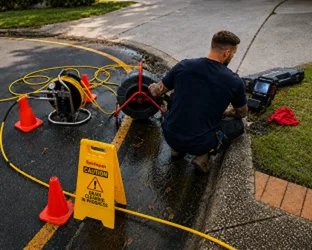
Isolate and contain before anything else, then diagnose properly and put a fixed number in front of you.

Repaired on the spot where possible, tested before we go, and the site left clean rather than mid-job.
Describe what it is doing and we will tell you honestly whether it needs a van now or costs less on Monday.
Straight answers on rates, timing and when it can safely wait.

Ring us and a plumber picks up. Leave details instead and you will get a callback with an ETA, not a sales call.

Leave your details and our local Strathfield team will call you back fast.